
As India moves into full enforcement of the single-use plastic ban in 2026, corporate CSR initiatives are shifting from awareness campaigns to measurable, on-ground impact. Brands are no longer satisfied with collection drives alone—they want verifiable downstream diversion, community empowerment, and auditable BRSR metrics.
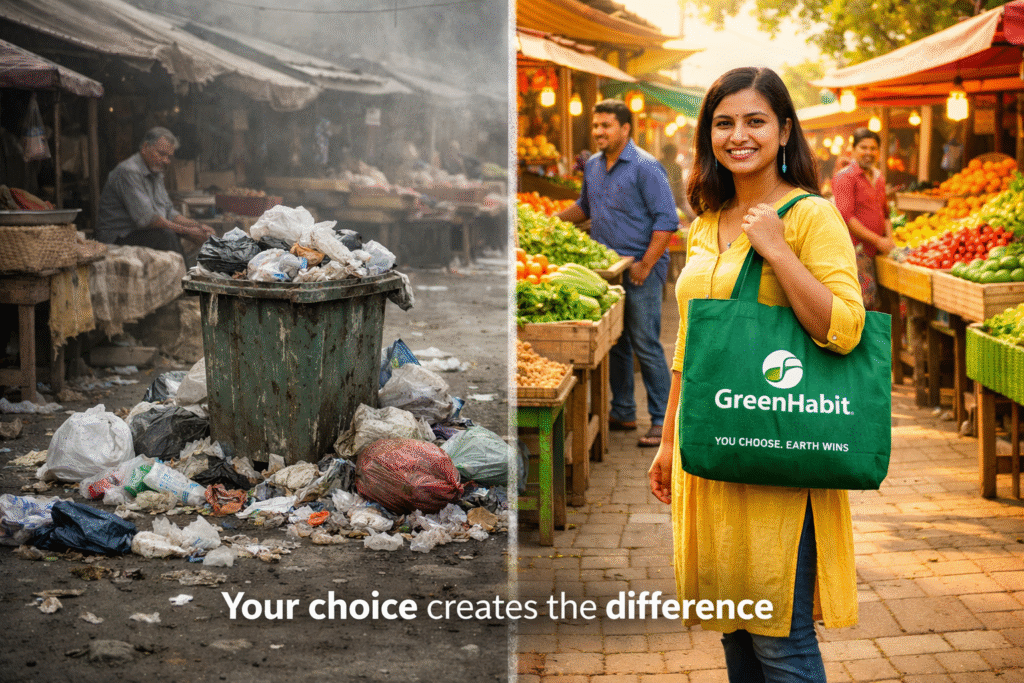
At GreenHabit, we’ve seen how innovative partnerships can deliver exactly that.
The Evolution of Plastic Waste CSR in India
Traditional CSR focused on:
- Employee collection programs (e.g., “My 10 Kg Plastic”)
- Partnerships with waste pickers
- Extended Producer Responsibility (EPR) compliance
While valuable, these often struggle with downstream leakage—plastic carry bags used by millions of unorganized retailers and street vendors continue to enter landfills and oceans.
2026 demands a new approach: source-level replacement with certified alternatives that prevent plastic use altogether.
GreenHabit’s Model: Prevention + Measurable Impact
GreenHabit partners with brands to sponsor CPCB-certified, 100% plant-based compostable carry bags distributed free to Uttar Pradesh street vendors.
Why this works for CSR teams:
- Prevention over cure: Replaces single-use plastic before it becomes waste
- Community empowerment: Vendors avoid fines and gain reliable packaging
- Verifiable metrics: Geo-tagged distribution, signed diversion certificates, CO₂e calculations – ready for BRSR Principle 6 & 8 reporting
- Zero-risk entry: Start with 10,000 bags, no long-term commitment
Download our Material Specifications PDF to see technical details (BIS/ISO 17088 certified, food-safe, zero microplastics).
Real Impact Numbers (From Active Pilots)
- Plastic diverted: 5+ tonnes per 25,000-bag monthly sponsorship
- CO₂e avoided: ~15 tonnes (IPCC-aligned calculation)
- Vendor reach: 250+ kirana stores and markets
- Brand impressions: 5+ lakh monthly at street level
These numbers aren’t estimates—they’re documented with photos, videos, and certificates.
How Leading Brands Are Adapting
Forward-thinking companies are integrating source-level solutions into their CSR strategies:
- Combining collection drives with prevention programs
- Using geo-tagged proof for transparent reporting
- Engaging local communities through vendor partnerships
- Aligning with government initiatives like Swachh Bharat
GreenHabit makes this integration seamless.
5 Steps for Effective Plastic Waste CSR in 2026
- Audit downstream leakage in your value chain (carry bags are often overlooked)
- Pilot prevention with certified alternatives
- Document impact with third-party verifiable data
- Report transparently in BRSR filings
- Scale successful models across regions
Ready to Move from Collection to Prevention?
The most impactful CSR initiatives in 2026 will be those that stop plastic waste before it starts.
Book a 15-minute demo to explore how GreenHabit can deliver measurable plastic waste reduction for your brand.
GreenHabit – You Choose. Earth Wins.